November 23rd, 2010 Brian Herzog
 I'm often embarrassingly late to hear about things, and I think this is another example. Last Friday I went to a presentation by Boston Radical Reference Collective librarians held at sprout & co in Somerville, MA, sponsored by Artists in Context.
I had no idea what to expect. I thought I had heard of Radical Reference before, but I wasn't sure.
Turns out, this event was great. The Radical Reference librarians explained that, among other things, they are a group of librarians trying to do real grassroots community outreach. Instead of holding a program in a library and hoping people come, they contact different organizations in the community and visit them with a specifically-tailored presentation to suit their needs.
But best of all, this isn't affiliated with any particular library - it's just volunteer activist librarians who feel outreach and information literacy is important.
Friday night the presentation covered online research tools available for the artist community. The Radical Reference librarians had created and showed off a subject guide, but most of the evening was back-and-forth discussion. There were about forty people there total, and many in the audience were random librarians like me. Artists would ask questions or state a particular need, and after the presenters provided information, the rest of us would chime in with additional resources from our experiences.
After the presentation, there was time for mingling and trying to match those of us with research interests and skills with the artists who needed some insight. It was really great, I think, for everyone - artists, the groups involved, and even I had a good time (which is rare for me in a room full of strangers). I'm definitely going to look into Radical Reference to see how else I can get involved - their website has both a volunteer interest form and a list of local collectives.
Also, for what it's worth: I'm heading to Ohio for Thanksgiving with my family, and so won't be posting again until next week. Happy holidays.
Posted under Uncategorized | 3 Comments »
November 20th, 2010 Brian Herzog
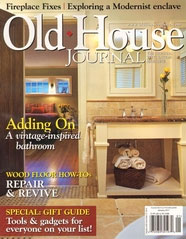 This wasn't actually a reference question, but can be filed under "things you didn't really question until someone provided an answer that showed you weren't asking the right question."
Occasionally at my library, if falls to me to add new magazine issues that arrive. We have a variety of subscriptions, like any library (weekly, monthly, quarterly, etc), and when I'm adding new issues, it always amazes me how early they arrive. Early, that is, based on the cover date of the magazine. I always just chalked this phenomenon up to a ridiculous marketing attempt to appear hyper-current.
Anyway, I was adding magazines in October, when the January 2011 issue of Old House Journal arrived. A month or so in advanced seemed the norm, so a magazine arriving three months early prompted me to tweet:
A little while later, and with this tweet in mind, my friend Chris emailed me with this:
Huh, TIL (Today I Learned):
http://en.wikipedia.org/wiki/Newsweek#Cover_Date
The date on a magazine is the date it's supposed to be pulled out the shelf, not the publication date or something else.
Wow - that actually makes a certain kind of sense. I tried to verify this with another source, but couldn't find one. However, Wikipedia did provide a little more information in the Cover Date article:
In the United States, Canada, and the United Kingdom, the standard practice is to display on magazine covers a date which is some weeks or months in the future from the actual publishing/release date. There are two reasons for this discrepancy: first, to allow magazines to continue appearing "current" to consumers even after they have been on sale for some time (since not all magazines will be sold immediately), and second, to inform newsstands when an unsold magazine can be removed from the stands and returned to the publisher or be destroyed.
Weeklies (such as Time and Newsweek) are generally dated a week ahead. Monthlies (such as National Geographic Magazine) are generally dated a month ahead, and quarterlies are generally dated three months ahead.
In other countries, the cover date usually matches more closely the date of publication, and may indeed be identical where weekly magazines are concerned.
So there you go - I love learning things by accident.
Tags: cover, cover date, cover dates, date, dateline, datelines, dates, libraries, Library, magazine, magazines, periodicals, public, Random, Reference Question
Posted under Uncategorized | 4 Comments »
November 18th, 2010 Brian Herzog
Thinking about the new design of the San Jose Public Library reminded me that I've been collecting links to tools and articles about web design. I posted a few resources before, but the demise of Bloglines has prompted me to pull out all my bookmarks and do something with them.
I'll be using these when we redesign our website, and hopefully you'll find them helpful too:
Web Design Overview
Design Tips & Goals
Testing & Development Tools
And the final word on this subject will come from Chuck - Design Coding is not only hilarious, it's amazingly accurate:
But I'm sure there are tons of other tools out there, so please share your favorite in the comments. Thanks.
Tags: coding, design, development, libraries, Library, public, Resources, site, sites, Technology, tools, web, web design, website, Websites
Posted under Uncategorized | 4 Comments »
November 16th, 2010 Brian Herzog
Whoa - check out the new website for the San Jose Public Library:
Sarah goes into some detail about the features of the new website and their reasoning behind it, which is worth reading. Here's my two cents too:
- I love that they've done away with organizing their website along library department lines (Reference, Childrens Teens, etc.)
- The design is wonderful - so clean and simple, yet colorful, engaging and informative. It's so different it's shocking at first, but once your eyes and mind adjust to the new design, everything is just there
- Actually, now that I think of it, the homepage reminds me of the app icons on a smartphone - which is an interface that increasing numbers of people are becoming familiar with
- I like embedding functionality, so two things I'd be curious to try to see if they'd work are:
- In the New and Events block, instead of a picture to click on, embed a scrollable list of upcoming events to bring that info one step closer to the patron. Also include the link to drill down into the rest of that section
- In the Locations block, again instead of a picture, it'd be neat to just embed the Google Map right there, and have each of the branch location markers include address, phone, email, and hours. That would put so much information right on the homepage, and of course again include a link to get into the rest of the section
- But these might be overwhelming, so you'd have to try them to see
My library is planning to redesign our website, ahead of our migration to Evergreen. I'm definitely going to lobby to use SJPL's design as one of our models. Good job guys.
Posted under Uncategorized | 4 Comments »
November 13th, 2010 Brian Herzog
 A patron walked up to the desk and placed a piece of scrap paper in front of me. On it was written:
...Just had an *awesome* dinner...
After I read it, the patron explained that a friend of hers had just posted that message to Twitter. She wanted to know if there was such a thing as an "air asterisk" - like "air quotes," but to add the emphasis of the asterisks instead of the sarcasm of the quotes.
Huh. I first searched the web for "air asterisk" and "air asterisk" "air quote" but only found a website where one of the comments asked the same question, but never answered it.
So I tried to be creative and search for "air star" "air quote", which led to a website describing how kids in London did air asterisks. That was funny, but we thought drawing out the six lines was too involved.
 We were talking during the search, and decided that five fingers + one arm = six lines, so just holding your hands up with fingers extended would be a good "air asterisk" - similar to the "Just Jack" move.
I next thought to search Urban Dictionary for "air asterisk," which referred to the term "airsterisk" but didn't explain how it was performed. So we searched the web again for "airsterisk" and this time found a YouTube video where they both demonstrate and explain it:
The video is from 2006, so they're right - it is catching on. - Except: they're using it for a footnote, but for our purposes we'd actually use both hands to add emphasis to the word *awesome.*
In the end, the patron actually seemed kind of pleased we couldn't find the exact thing anywhere online - kind of like she had come up with something entirely new. She thank me by saying,
*Thanks* for your help.
Tags: air, air quotes, airsterisk, airsterisks, asterisk, asterisks, emote, libraries, Library, public, Random, Reference Question
Posted under Uncategorized | 7 Comments »
November 9th, 2010 Brian Herzog
 After it was announced in September that Bloglines was shutting down (although Chris knew better), I sadly and reluctantly started testing replacements. So you'd think that the recent announcement that Bloglines will continue after all would send me tearing back, right?
The answer, actually, is no - and I think there's a lesson in there for libraries.
When Ask.com announced they were ending Bloglines, that's what they said - service will be terminated. They didn't say they were looking to spin it off, or really give its users any obvious signs of hope. The deadline extensions implied they were exploring ways to continue the service, but my feeds were too important to me to sit around and hope.
After evaluating a few alternatives, I switched to Netvibes. And now that I've invested a month tweaking it and getting comfortable with it, the idea of switching again - even back to something "familiar" - is just not appealing and I'm not going to do it.
I say "familiar" after reading about the future plan for Bloglines - fewer features and more ads. To me, this indicates a shift in focus, from "user as customer" to "user as product" (meaning, "what's good for me" versus "what's good for them") - which gives me zero incentive to use it anymore*.
So, I think the moral of the story also applies to libraries:
- If you have something successful (like a storytime, newspaper column, podcast, Sunday hours**, book group, etc.) that has to be temporarily interrupted, make sure people know they can count on it coming back
- Don't be gone too long, because in the meantime people will find alternatives and might not be there when you're ready to welcome them back (communicating reminders and updates is a good idea)
- Don't open up room for doubt - say what's going to happen, and then do it. If anything changes, let people know (again, communication is key). Once trust is lost it's tough to recover, and it's far easier to keep supporters than it is to win them back
- And when you do come back, make sure you're still offering what it is that people liked in the first place, and not just something that suits you better
My gosh, why is this all sounding so bitter? I'm really not, I promise. I just think this is a good cautionary tale on how easy it is to lose support - and support is everything to libraries.
*Incidentally, this is, as I see it, exactly the business model Facebook uses (and exactly why I don't use Facebook). All the ways Facebook's users' privacy is violated can be traced back to it - the more information about you they sell to advertisers, the more money they make. Facebook's customers are its advertisers, and Facebook users are the product.
**Sunday hours might be a bad example - we could be open only even-numbered Sundays in odd-numbered years when the temperature is greater than the square root of 1764, and we'd still be busy.
Posted under Uncategorized | 4 Comments »